
Mediation
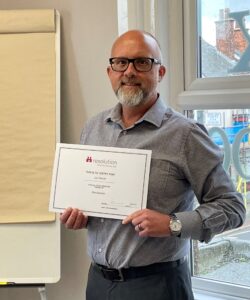
Kay & Pascoe LLP are pleased to announce that Lee Pascoe has successfully completed his Mediation Foundation Course. Lee joins fellow partner, Sharon Kay, as being able to offer mediation.
The course was run by Resolution on-line over 9 days during June, July and September. As a member of Resolution, Lee Is committed to offering his clients a constructive approach that considers the needs of all of the family and in particular the interests of any children.
Lee has extensive experience as a solicitor, who has advised on family law matters for 28 years. During this period he has advised on issues relating to the arrangements for children and the financial arrangements both for married couples and couples that have lived together.
Although Lee has represented clients within the court process, he has become increasingly convinced that there has to be a better way for resolving disputes arising from the breakdown of a relationship. As Lee says “Before the pandemic the court system was creaking under the ever-increasing workload. The significant delays in the court process have increased tremendously since March 2020 and are showing no real signs of easing.”
Mediation serves to avoid couples becoming embroiled in a lengthy and expensive court battle that, all too often, results in a Judge deciding important issues for the family..
By contrast, Mediation has many advantages compared to bringing a case to court. They include:
- Where there are children involved, their needs are prioritised and will be at the forefront of the discussions that take place in mediation.
- Mediation is a voluntary process, whereby the couple choose to be there.
- Mediation is private and confidential, which engenders honesty and helps to avoid taking an obstructive and positional stance.
- Mediation is both timely and convenient. It can progress as quickly or as slowly as the couple wish. There is no need for delays, unlike the court process when it can often take months, for a court hearing date to become available.
- Mediation is assisted by the mediator adopting the approach of a neutral third party who encourages the couple to explore and, more often than not, find the solution that is best for their family.
- Mediation has a high rate of success because it is the couple who find the solution. Ultimately, they are the people usually best placed to know and decide what is best for their children.
- Mediation helps preserve ongoing relationships. This can be so important, particularly when it comes to resolving future issues regarding the children. As the children get older the arrangements will often need to be reconsidered. The arrangements that are suitable for a three-year-old may be very different by the time that child turns thirteen. By encouraging the couple to communicate constructively with one another, rather than adopt an intransigent position, it means discussions in the future are more likely to result in agreement. In court proceedings it can become all too easy to be critical of the other person, which can have far-reaching consequences.
For an initial discussion with Lee about mediation please call him on 01892 664348 or send him an email on lee@kayandpascoe.co.uk